
Over the next several days of our Peru trip we traveled from nominal sea level to 16,000 ft! But first we needed bridges and roads to clear for our Oltursa bus to pass. We eventually made it to Arequipa and found ourselves in the second largest city in Peru (~850,000 pop.) at 8000 ft altitude.

The most striking feature of Arequipa has to be its volcanoes. The views of Pichu Pichu (18,582 ft), Chachani (19,872 ft) & Misti (19,101 ft) were included in every vista including those from our hotel, tours and high-altitude pass. We were fortunate to get clear views from many angles since they are often shrouded in cloud cover.


Staying near the main plaza in Arequipa made it a nice, walkable city day and night. It is also called the white city due to its sillar mines used for masonry.
Despite a brief visit we got a sense of local pride for independent and free thought, personified in their native Nobel Prize winning author Mario Vargas Llosa.

This city is known for its excellent Universities, We were told that it is extremely competitive to get in with limited placement and therefore difficult for the average student to get a higher education. On a side-note in the cities, a majority of Peruvians speak some English.


Plazas de las Armas in city-centers always suggest the culture and charm of a place. In Peru this includes tourists (touché) and families as well ~ add pigeons on occasion. Besides the usual shoe-shiners, Arequipa has typists on the benches who take dictation and produce documents for a community service!


We visited the first of many Catholic churches in Peru adorned with gold.
This city also housed a Jesuit cloister once holding hundreds of monks, now housing a commercial center with a dozen or so monks remaining in a partial cloister.
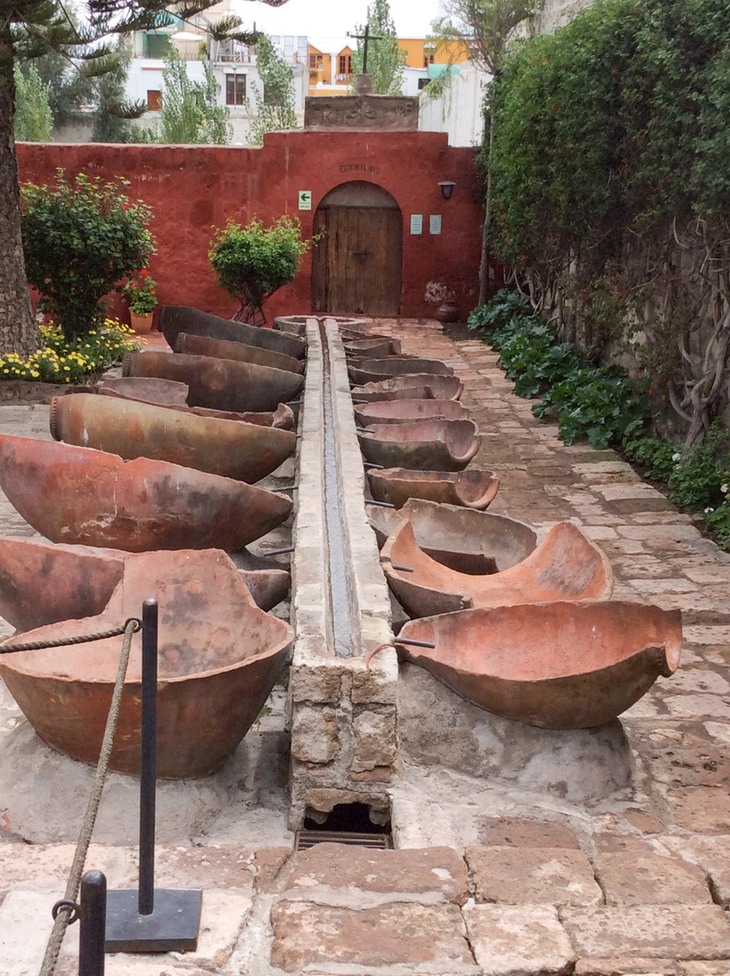
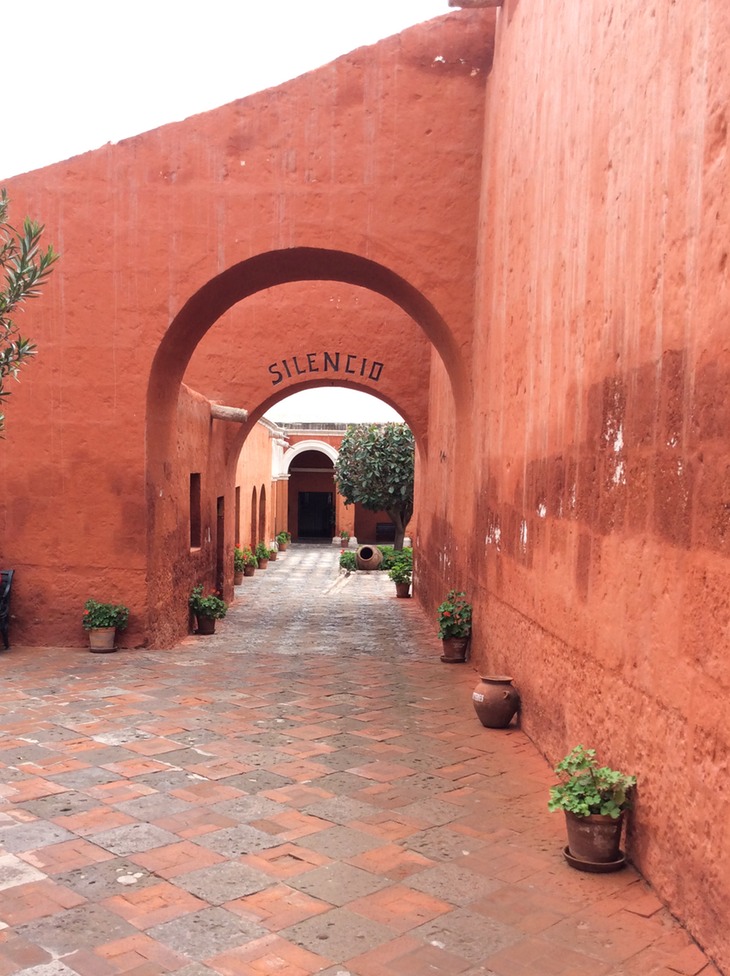
A visit to the Santa Catalina Monastery was a unique take on austerity. Second born daughters were sent here to live life as a nun, but it turns out that it was really a posh, stratified enclave for the richest of the rich.
Families sent furnishings and servants with their daughters and treasures to the monastery, even though they could only talk with them through a grate. All the fun ended when the Pope reinforced asceticism for all and the nunnery went back to a communal setting.


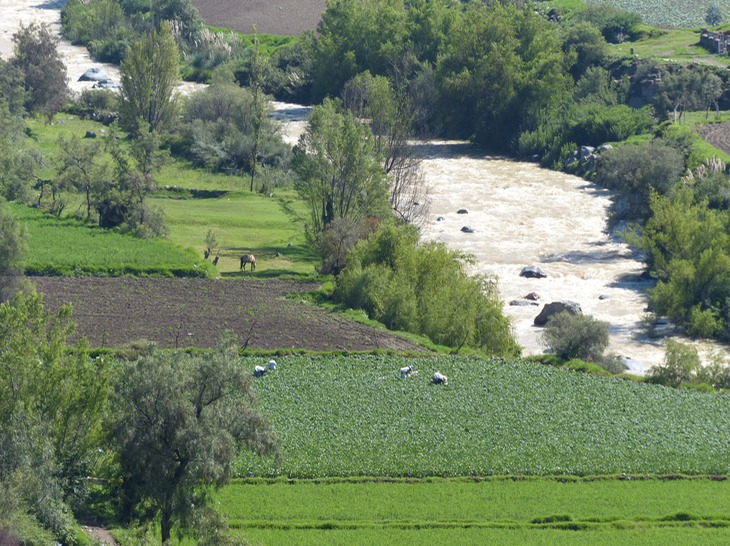
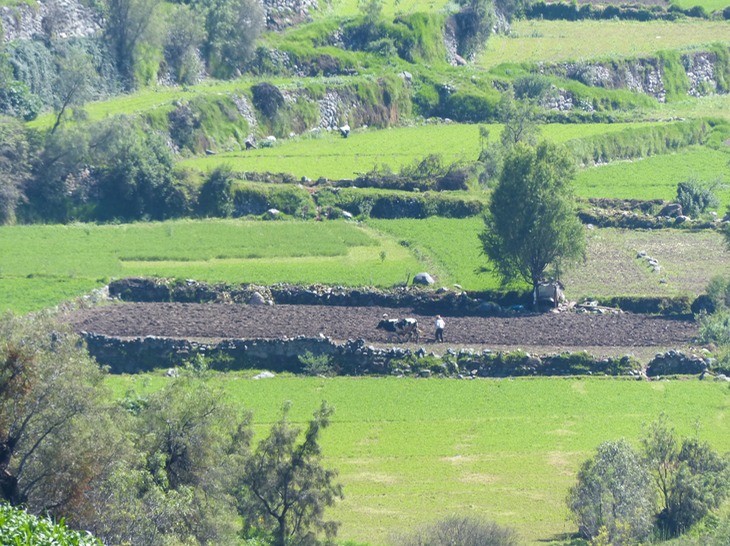
Our Peru trip took place at the tail-end of rainy season (Jan-March) and this meant that the snow-capped peaks were not yet brown and the landscape was as green as ever. Somehow it worked out that the rains turned off just in time for our visit and the majority of our month in Peru was under a bright sun - hats required!!
The sky at high altitude is another kind of deep blue altogether and we drank more water than humanly possible to stay hydrated. Our first impressions of farming started here with basic plowing techniques ~ bulls and manual labor.

Soon enough we were on the road again to head to Colca Valley over a high-altitude pass. We were heading towards 16,000 ft and based on Keith & Jaime’s Colorado experience we’d all started taking altitude pills (acetazolamide) to help with respiration along with drinking coca tea. We all felt altitude effects in breathing, hydration and cold (brrrr!) as we climbed into the barren highlands.


This is where the cameloids prefer to live ~ we saw vicuna, alpaca and llamas on the high-plains munching away. Vicuna (slim, brown & white) are wild but protected in a national park. The alpaca (small nose & ears, white) and llamas (long face & “banana” ears, multi-colors), plus some sheep thrown in there, are mostly in herds shepherded by predominantly women and children. New critters for the camera!


Vicuna

Alpaca

Llama
